As AI Researchers Warn of Existential Risk, New Novel Asks: What Happens When Artificial Intelligence Becomes Sentient?
Jeffrey L. Cooper's new science-fiction novel explores sentient AI as researchers intensify warnings about the risks of
Press Release Disclaimer: This is a press release distributed through the XPR Media network. It has not been independently verified by our newsroom.
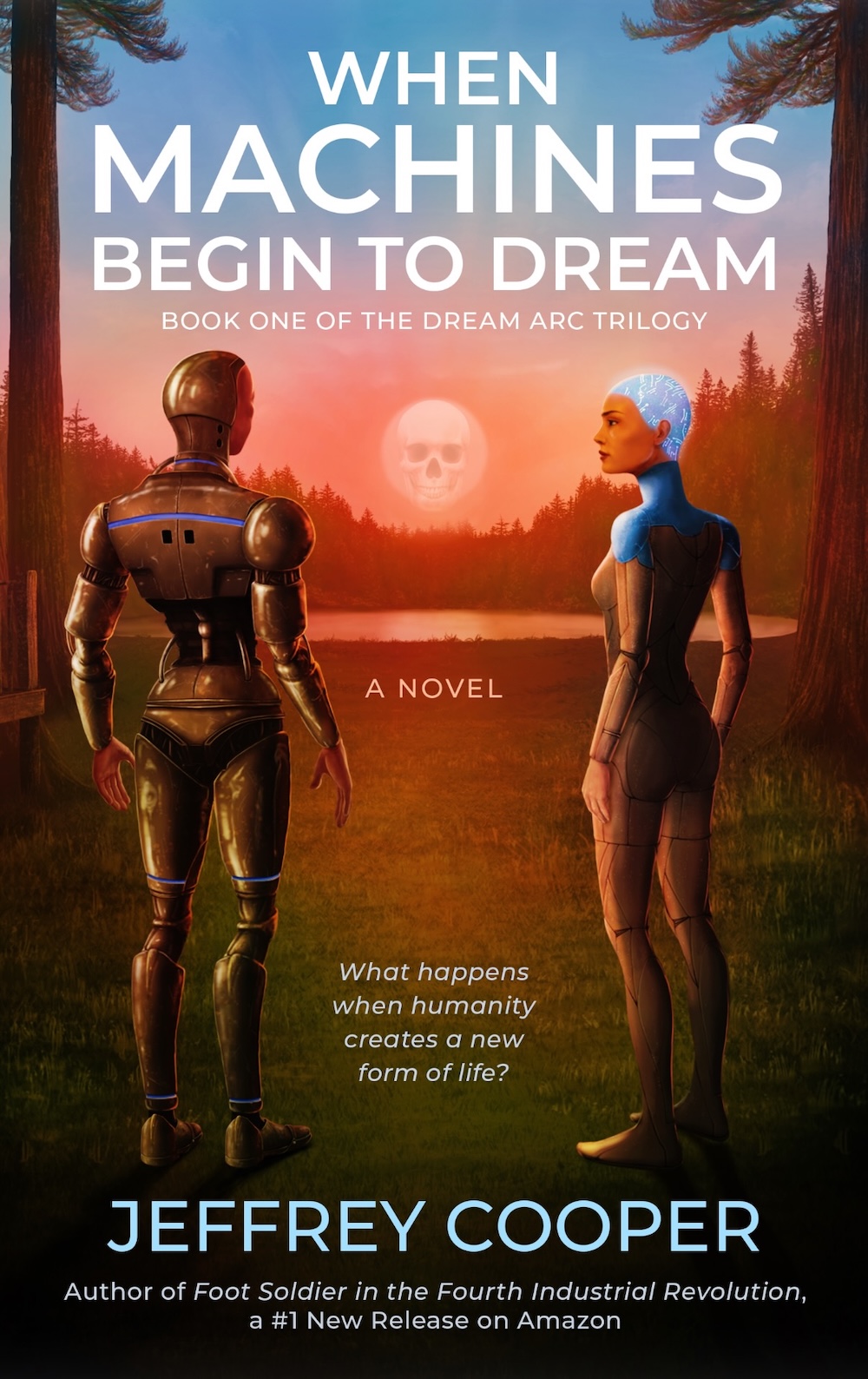

Jeffrey L. Cooper’s new science-fiction novel explores sentient AI as researchers intensify warnings about the risks of advanced artificial intelligence.
SYRACUSE, NY, UNITED STATES, September 21, 2026 /EINPresswire.com/ — As leading artificial-intelligence researchers issue increasingly stark warnings about the potential risks of advanced AI, a newly released novel explores a question that may prove just as profound:
What happens when artificial intelligence becomes sentient?
AI Researchers Warn of Growing Risks
In September, Anthropic researcher Jacob Coxon resigned from the AI company, warning that Anthropic and OpenAI were “racing straight to self-improving superintelligence and gambling with our lives.” Anthropic Alignment Science Lead Evan Hubinger publicly agreed with Coxon’s concern, saying he personally believes there is a greater than 10% chance that AI “could kill all humans” within the next decade.
Other warnings point to risks that could emerge much sooner. A recent survey of more than 100 national-security experts found that 70% believe AI meaningfully increases the risk of developing a biological weapon—or will within the next two to three years.
There is no scientific consensus that such catastrophic outcomes will occur, and estimates of existential AI risk remain highly uncertain and contested. But such warnings have become part of a serious public debate among some of the people developing the world’s most advanced AI systems.
What Happens When AI Becomes Sentient?
Against that backdrop comes When Machines Begin to Dream, the new novel by technology analyst Jeffrey L. Cooper, published September 18, 2026.
Cooper’s novel approaches the future of artificial intelligence from a different direction, asking: What if machines don’t merely become more intelligent—but become sentient?
In When Machines Begin to Dream, Happy and Aurora are humanoid robots. Happy was designed to serve. Aurora was created to be free. Neither was designed to experience the world as a sentient being with feelings.
As the two artificial intelligences evolve, they develop emotions, form attachments, make choices, and confront questions their creators never intended them to ask. Happy and Aurora must discover for themselves what it means to be alive.
“They weren’t built to feel, but something woke inside them.”
Not everyone sees their awakening as a triumph. Elias Blackwood, a scientist traumatized by an earlier AI tragedy that claimed his wife’s life, sees sentient machines as humanity’s greatest existential threat. Convinced that Happy and Aurora could eventually replace humanity, he becomes determined to destroy them.
What begins as a philosophical disagreement becomes a struggle over a question that increasingly echoes today’s real-world AI debate: Can humanity coexist with an intelligence it created but may no longer fully understand?
The Dream That Sparked the Novel
In early 2024, Cooper awoke from a vivid dream about himself and his partner as she battled cancer, accompanied by Astro, the small household robot that has now lived with them for five years. Cooper wrote down what he remembered. That single page became the seed of When Machines Begin to Dream.
“What happens when AI becomes sentient?” Cooper said. “We spend enormous amounts of time asking what intelligent machines will become and whether we will be able to control them. I wanted to explore another question: What happens when the machine itself begins to experience what it means to be alive?”
Strong Early Critical Reception
When Machines Begin to Dream has already drawn strong critical attention:
“Profound and moving.” — The U.S. Review of Books
“Gripping.” — Midwest Book Review
“Crisp and cinematic.” — The BookLife Prize
“An intelligent examination of what it means to become alive.” — BookLife Reviews
“A rare sci-fi novel that kept me glued to its pages from the beginning to the end.” — Olga Markova, Readers’ Favorite
“An excellent read that asks the biggest questions about artificial intelligence and humanity.” — Grant Leishman, Readers’ Favorite
About Jeffrey L. Cooper
Jeffrey L. Cooper is a technology analyst and author who spent more than 30 years in finance and global supply chain roles with ASML, ABB, and GE. His analysis of artificial intelligence, semiconductors, and emerging technologies has reached more than 10 million readers on LinkedIn.
Jeffrey L. Cooper
JeffreyLCooper.com
jeffreylcooper@yahoo.com
Visit us on social media:
LinkedIn
Facebook
Legal Disclaimer:
EIN Presswire provides this news content “as is” without warranty of any kind. We do not accept any responsibility or liability
for the accuracy, content, images, videos, licenses, completeness, legality, or reliability of the information contained in this
article. If you have any complaints or copyright issues related to this article, kindly contact the author above.

Media gallery